Description
Epithalon Peptide – Anti-Aging, Cellular Regeneration, and Anti-Mutagenic Potential
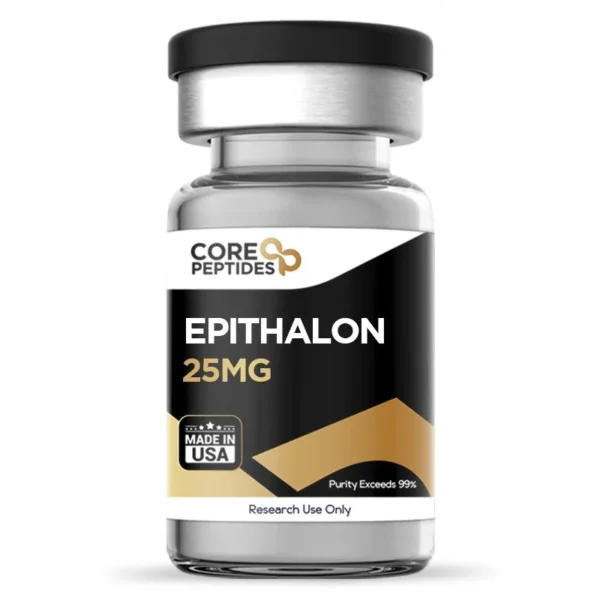
Epithalon, also called AEDG peptide, tetrapeptide Epitalon, or Epithalone, is a synthetic tetrapeptide composed of amino acids Ala-Glu-Asp-Gly. Research suggests that Epithalon may regulate brain function, stimulate the pineal gland, and support retina health. It may improve sleep by increasing melatonin production and potentially activate telomerase, exhibit antioxidant effects, and maintain retinal integrity.
The peptide is derived from Epithalamin, a naturally occurring pineal peptide that may improve melatonin synthesis, enhance immune function, and restore reproductive performance in aged rodents. Advances in synthetic peptide technology allowed scientists to create Epithalon, mimicking Epithalamin’s biological actions.
Chemical Makeup
-
Molecular Formula: C14H22N4O9
-
Molecular Weight: 390.34 g/mol
-
Other Names: Epitalon, Epithalone
Epithalon and Longevity
Studies in gingival mesenchymal stem cells (hGMSCs) suggest that Epithalon may modulate gene expression by interacting with histones HI/6 and HI/3, which in turn influence DNA accessibility. The peptide may act as a histone mimic, altering chromatin structure to promote transcription of genes involved in neuronal differentiation.
In retinal and periodontal ligament stem cells (hPDLSCs), Epithalon increased mRNA levels of neurogenic markers Nestin, GAP43, β-Tubulin III, and Doublecortin by 1.6–1.8 times. These changes may enhance neuronal differentiation and protein synthesis, improving cellular function.
Epithalon and Oxidative Stress
Research shows that it may reduce intracellular reactive oxygen species (ROS) in aged oocytes, demonstrating antioxidant activity. It appears to preserve spindle integrity, maintain cortical granule placement, and improve mitochondrial function, which supports ATP production and cellular metabolism.
Additionally, this reduces DNA damage and apoptosis, as indicated by lower γH2AX signals and reduced Annexin-V staining. These effects may protect aged oocytes and maintain genomic stability.
Epithalon and Anti-Aging
Epithalon may promote cell proliferation and regeneration while inhibiting age-related apoptosis. It has been shown to increase Ki-67 and CD98hc expression, which typically decline with age. The peptide may also restrain Caspase-3 activity, reducing programmed cell death and enhancing cellular longevity.
Epithalon and Telomere Function
In fetal fibroblasts, this stimulated telomere elongation, allowing cells to undergo additional divisions beyond their normal limit. This effect appears to extend the Hayflick limit and restore normal cell cycle progression, suggesting potential benefits for cellular aging.
Epithalon and Immune/Chromatin Regulation
In lymphocytes from elderly subjects (76–80 years old), it activated ribosomal genes and decondensed heterochromatin, restoring suppressed genetic activity. These findings suggest that the peptide may reactivate aging chromosomal regions, supporting cellular function in geriatric subjects.
Epithalon and Anti-Mutagenic Action
Studies in three mouse models (SAMP-1, SAMR-1, SHR) indicate that this may reduce chromosomal aberrations, especially in accelerated-aging models. Administration at two months decreased aberrations across all models, showing anti-mutagenic potential.
Epithalon and Cancer
In one study with female C3H/He mice, this administration inhibited tumor growth and metastasis in mammary glands and ovaries. Mice treated with this showed fewer tumor cells compared to controls, suggesting potential anti-metastatic properties. You may also be interested in our related research peptides, including bpc 157, bpc 157 peptide, Tesamorelin, ghk cu peptide, tesamorelin peptide, cjc 1295 ipamorelin, mots-c, semax, and PT-141. For research use only.
Epithalon in Hypophysectomized Birds
Research on hypophysectomized birds, including young and old chickens, demonstrated that it restored thymus gland morphology regardless of age. Birds treated early in life showed the most pronounced recovery, indicating the peptide’s developmental and regenerative potential.

Reviews
There are no reviews yet