Description
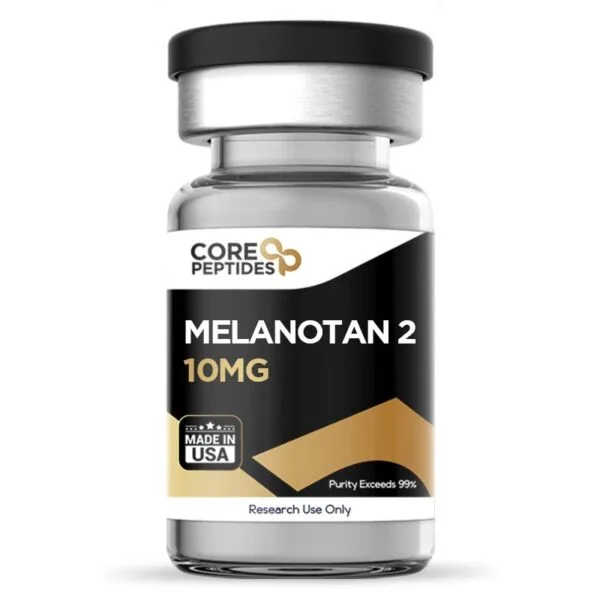
Melanotan 2 Peptide
Melanotan 2 peptide is a synthetic analog of α-melanocyte-stimulating hormone (α-MSH).(1) This research peptide is classified as a cyclic heptapeptide and is studied for its potential interaction with several melanocortin receptors throughout the body. In laboratory settings, Melanotan 2 is primarily investigated for its possible role in melanogenesis, the biological process involved in melanin production, as well as its potential relevance in pathways connected to appetite regulation, neuro signaling, and arousal-related mechanisms.(2)
Because of its modified structure, Melanotan 2 may display altered receptor affinity when compared with the endogenous hormone. This receptor activity has made the peptide a subject of interest in research involving pigmentation, central nervous system signaling, and melanocortin receptor biology. You may also be interested in our related research peptides, including Tripeptide, Sermorelin Peptide, Hexarelin, Melanotan 1, Oxytocin Peptide, Snap 8 Peptide, Pinealon, Kisspeptin 10 mg, VIP Peptide, and ARA 290 Peptide.
Overview
Melanotan 2 is generally described as a non-selective melanocortin receptor agonist with the potential to bind to four of the five known melanocortin receptor subtypes (MC-R).(3) Depending on the receptor subtype involved and the tissue in which that receptor is expressed, Melanotan 2 may produce different biological effects.
The receptors most often discussed in relation to Melanotan 2 include:
Melanocortin 1 receptor (MC1R): This receptor is believed to be expressed primarily in melanocytes, which are found in tissues such as the skin, hair, and certain ocular structures. When Melanotan 2 interacts with MC1R, researchers suggest that it may stimulate eumelanin production, potentially leading to darker pigmentation in the epidermal layer.(4)
Melanocortin 3 receptor (MC3R): MC3R may be present in multiple tissues, including regions of the brain and placenta. Early findings suggest that this receptor may be involved in signaling pathways related to appetite and metabolic modulation under certain experimental conditions.
Melanocortin 4 receptor (MC4R): MC4R is thought to be concentrated in areas of the central nervous system, especially within the hypothalamus. This receptor has been widely discussed in studies involving arousal signaling, behavioral regulation, and centrally mediated melanocortin activity.(3)
Melanocortin 5 receptor (MC5R): MC5R appears to be distributed across a variety of tissues, although its precise biological role remains less clearly defined. Some researchers have proposed that it may contribute to peripheral glandular and regulatory processes, but this remains under investigation.
For example, when Melanotan 2 binds to MC1R, it may support the synthesis of eumelanin, which is associated with darker pigmentation of the skin.(4) By contrast, interaction with MC4R has been linked in research to supraspinal signaling pathways that may influence libido and arousal-related responses. These signals may then be transmitted to sympathetic and parasympathetic centers in the spinal cord and thoracolumbar region.(3)
Chemical Makeup
Other Known Titles: MT-II
Molecular Weight: 1024.19 g/mol
Molecular Formula: C50H69N15O9
Research and Clinical Studies
Melanotan 2 Peptide and Nerve Cell Regeneration
Research conducted in a murine model of peripheral nerve injury has been used to investigate the possible neurotrophic potential of Melanotan 2.(5) In this study, researchers observed that 48 hours after administration, the research models exposed to the peptide appeared to demonstrate recovery in sensory function. In addition, when these models were also presented with a chemotherapeutic compound, Melanotan 2 appeared to show a degree of neuroprotective activity, possibly reducing the extent of compound-induced neurotoxicity.
This potential has been suggested to involve MC4 receptor-mediated signaling, which may support neurite outgrowth and help promote the intrinsic regenerative capacity of neuronal tissue after injury.(5) Although the exact intracellular pathways remain uncertain, POMC-derived melanocortin peptides, including analogs of α-MSH, have been proposed to influence neuronal structure by increasing neurite number and length and possibly encouraging nerve sprouting in damaged tissue. Since Melanotan 2 is regarded as a potent melanocortin receptor agonist, researchers have hypothesized that it may trigger intracellular signaling events that contribute to improved nerve fiber recovery after injury or toxic insult.
As noted by the researchers, Melanotan 2 appeared to demonstrate neuroprotective properties, partially protecting nerve tissue from cisplatin-induced toxic neuropathy.(5)
Melanotan 2 Peptide and Arousal Neurosignaling
In a clinical study,(6) Melanotan 2 was reported to increase arousal-related neuron signaling in more than 80% of cases, compared with approximately 20% in the placebo group. Researchers proposed that this activity may occur through MC4 receptor signaling, potentially acting downstream of known neuromodulators such as dopaminergic and oxytocinergic pathways.
These signaling effects are thought to involve discrete hypothalamic centers that coordinate homeostatic and motivational behaviors. In this context, Melanotan 2 may influence the balance of neuronal activity within melanocortin-responsive circuits.(6) Some researchers have also suggested that MC5 receptors in peripheral glands may contribute a secondary route linking central neuro signaling with peripheral modulatory responses, although these mechanisms remain theoretical and require further exploration.
Melanotan 2 Peptide and Neurodevelopmental Modulation
Melanotan 2 has also been examined in research exploring abnormal neural signaling and social behavior pathways.(7) Investigators have suggested that the peptide may influence neuronal populations involved in social cognition through endogenous oxytocinergic signaling, particularly within MC4R-sensitive circuits. These circuits may include regions such as the paraventricular nucleus of the hypothalamus, where Melanotan 2 could potentially stimulate the release of endogenous oxytocin.
This oxytocin-related activity may then affect other neurotransmitter systems, including serotonin, glutamate, dopamine, and GABA, all of which are believed to play important roles in social adaptation and broader neurobehavioral regulation.(7) Through these interactions, Melanotan 2 may alter communication between cortical and subcortical networks, including areas such as the anterior cingulate cortex, where oxytocin receptor distribution may differ in atypical neurodevelopmental states.
Researchers have therefore hypothesized that Melanotan 2 might influence synaptic communication, synaptic plasticity, and network-level neuroarchitecture, although these proposed effects remain part of an evolving research field.(7)
Melanotan 2 Peptide and Models of Sunless Tanning
One of the most recognized areas of Melanotan 2 research involves its possible role in melanin production and pigmentation. Researchers suggest that Melanotan 2 may increase melanin synthesis and promote darker pigmentation without the need for ultraviolet irradiation by acting on MC1R receptors in melanocytes.(8)
Its cyclic structure may also support more prolonged metabotropic activity compared with some other MSH analogs, which has made it a frequent topic in controlled research models focused on pigmentation pathways.(8) Although the exact intracellular cascades remain incompletely understood, current evidence suggests that receptor activation may lead to increased eumelanin synthesis, offering a potential basis for studying sunless tanning models in experimental settings.
Researchers have reported observations of increased darkened pigmentation in areas such as the face, upper body, and buttocks in research environments, supporting continued interest in Melanotan 2 as a peptide relevant to melanocortin and pigmentation research.(8)
Why Researchers Study Melanotan 2
Melanotan 2 peptide remains an important topic in peptide research because of its broad connection to melanocortin receptor biology, pigmentation studies, central nervous system signaling, and neuroregulatory pathways. Its potential interactions with MC1R, MC3R, MC4R, and MC5R make it especially relevant in scientific discussions surrounding melanin production, appetite-related signaling, arousal neurobiology, and neuronal recovery models.
Because it is active across several receptor systems, Melanotan 2 continues to attract interest from researchers studying how melanocortin agonists may influence both peripheral and central biological processes. Its role in laboratory models of pigmentation and neuro signaling has made it one of the more recognized compounds in this research category.
Melanotan 2 peptide is available for research and laboratory purposes only. Please review and adhere to our Terms and Conditions before ordering.
References:
- Ryakhovsky, Vladimir V et al. “The first preparative solution phase synthesis of Melanotan II.” Beilstein Journal of Organic Chemistry vol. 4 (2008): 39. doi:10.3762/bjoc.4.39. https://pubmed.ncbi.nlm.nih.gov/19043625/
- Mac E. Hadley, Discovery that a melanocortin regulates sexual functions in male and female humans, Peptides, Volume 26, Issue 10, 2005, Pages 1687-1689, ISSN 0196-9781, https://doi.org/10.1016/j.peptides.2005.01.023
- King, Stephen H et al. “Melanocortin receptors, melanotropic peptides and penile erection.” Current topics in medicinal chemistry vol. 7,11 (2007): 1098-1106. https://www.ncbi.nlm.nih.gov/pmc/articles/PMC2694735/
- Peters, Björn, et al. “Melanotan II: a possible cause of renal infarction: review of the literature and case report.” CEN case reports vol. 9,2 (2020): 159-161. doi:10.1007/s13730-020-00447-z. https://www.ncbi.nlm.nih.gov/pmc/articles/PMC7148395/
- Ter Laak, Mariël P, et al. “The potent melanocortin receptor agonist melanotan-II promotes peripheral nerve regeneration and has neuroprotective properties in the rat.” European Journal of Pharmacology vol. 462,1-3 (2003): 179-83. doi:10.1016/s0014-2999(02)02945-x. https://pubmed.ncbi.nlm.nih.gov/12591111/
- Wessells, H et al. “Melanocortin receptor agonists, penile erection, and sexual motivation: human studies with Melanotan II.” International journal of impotence research vol. 12 Suppl 4 (2000): S74-9. doi:10.1038/sj.ijir.3900582. https://pubmed.ncbi.nlm.nih.gov/11035391/
- Minakova E, Lang J, Medel-Matus JS, Gould GG, Reynolds A, Shin D, Mazarati A, Sankar R. Melanotan-II reverses autistic features in a maternal immune activation mouse model of autism. PLoS One. 2019 Jan 10;14(1):e0210389. Doi: 10.1371/journal.pone.0210389. PMID: 30629642; PMCID: PMC6328175.
- Dorr RT, Lines R, Levine N, Brooks C, Xiang L, Hruby VJ, Hadley ME. Evaluation of melanotan-II, a superpotent cyclic melanotropic peptide in a pilot phase-I clinical study. Life Sci. 1996;58(20):1777-84. doi: 10.1016/0024-3205(96)00160-9. PMID: 8637402.

Reviews
There are no reviews yet