Description
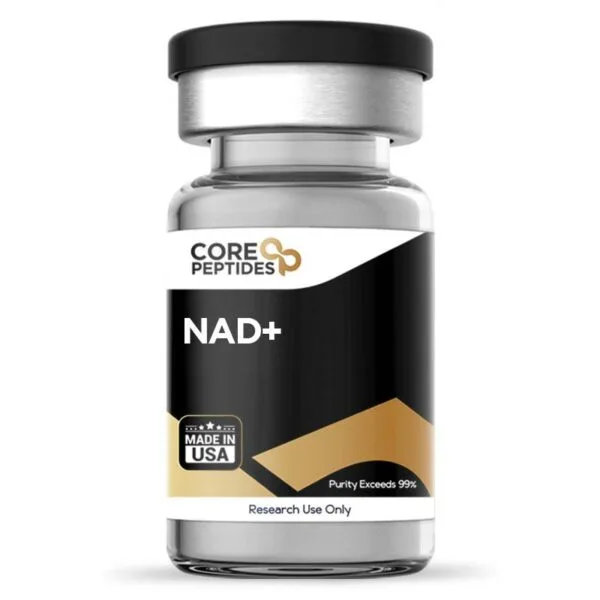
NAD+ Peptide
nad peptide is an acronym for Nicotinamide Adenine Dinucleotide, an endogenous nucleotide that is considered to regulate primary functions such as metabolism, energy production, and DNA repair. It is also considered to act as a secondary messenger via calcium-dependent signaling mechanisms, possibly serving as an immunoregulatory component.(1)(2) NAD+ is considered by researchers to be naturally synthesized via the de novo mechanism of converting the amino acid tryptophan through several enzymatic steps. Researchers posit that there are five components to NAD+ synthesis, including tryptophan, nicotinamide, nicotinic acid, nicotinamide riboside, and nicotinamide mononucleotide.(3) Once synthesized, research suggests it exerts over 500 enzymatic reactions and cellular processes(12) to aid metabolic activities. Essentially, it is suggested to act as a coenzyme in redox functions, converted to NADH (the energy-carrying form of NAD+), which may involve other metabolic pathways. You may also be interested in our related research peptides, including bpc 157, bpc 157 peptide, Tesamorelin, ghk cu peptide, tesamorelin peptide, cjc 1295 ipamorelin, mots-c, semax, and PT-141. For research use only.
Overview
Researchers have suggested Nicotinamide Adenine Dinucleotide (NAD+) to act as a coenzyme, with three major classes of enzymes including:
- Deacetylase enzymes in the sirtuin class (SIRTs)
- Poly ADP ribose polymerase (PARPs) enzymes, and
- Cyclic ADP ribose synthetase (cADPRS)
Research suggests that each class of enzymes interacts with NAD+ in the following possible respects:
- SIRTs may stimulate mitochondrial homeostasis, stem cell regeneration, loss of stem cells, and nerve degeneration.
- PARPs, composed of 17 different enzymes, may act alongside NAD+ enzymes and synthesize poly ADP ribose polymers, which may lead to genome stability.
- cADPRS include CD38 and CD157, which are considered to be key immunological cells. cADPRS appears to hydrolyze NAD+ and thereby may stimulate stem cell regeneration and DNA repair, which may be important for maintaining cell cycles.
Researchers suggest the above-mentioned enzymes to be NAD+ dependent enzymes, possibly acting based on the presence of Nicotinamide Adenine Dinucleotide (NAD). Researchers suggest that should all three enzymes be dependent on NAD+, they may potentially compete amongst themselves for bioavailability. It has been posited that the potential function of SIRTs, for instance, may lead to reduced PARPs activity and, thereby, potentially lead to weakened systems. Hence, it may be critical to maintain a balance between the availability and consumption of NAD+ to obtain optimal potential impact.(5)
Chemical Makeup
Molecular Formula: C21H27N7O14P2
Molecular Weight: 663.43 g/mol
Other Known Titles: nicotinamide adenine dinucleotide
Research and Clinical Studies
NAD+ Peptide and Productive Aging
Researchers suggest that NAD+ has two key intermediates: nicotinamide riboside (NR) and nicotinamide mononucleotide (NMN). Studies have indicated that these intermediates may be potent agents for promoting ‘productive aging.’ In a study,(7) normal-aging mice were exposed to the NMN intermediate for 12 months. Following the study, the researchers suggested that NMN may promote NAD+ synthesis in the mice. Peptide exposure may have been the catalyst for the observed reduced weight gain, increased energy metabolism, enhanced physical activity, improved lipid profile, and other physiological impacts in the mice.
NAD+ Peptide and Neurodegenerative Activity
Scientists consider mitochondrial dysfunction to lead to various functional limitations in the electron transport chain and ATP (energy) synthesis, possibly resulting in various neurodegenerative diseases. A study(8) was conducted where aged mice were exposed to NMN, a NAD+ intermediate, for 3 to 12 months. The study’s main aim was to evaluate the potential impact of the peptide on mitochondrial respiratory processes, for which fluorescent NMN protein was presented to the mice models. After peptide introduction, the mitochondrial oxygen consumption rates in the nerve and brain cells of the mice were studied. Upon analysis, it was suggested that mitochondrial functions had been restored in the aged mice, suggesting that NMN may be immediately utilized by the cells to produce NAD+, exerting a possible positive impact.
NAD+ Peptide and DNA Repair After Ischemic Stress
The main aim of this study(11) was to determine the neuroprotective potential of Nicotinamide Adenine Dinucleotide against ischemic stress induced in mice. For this study, ischemic stress was induced in the neuronal cultures in rats via deprivation of oxygen and glucose for about 2 hours. NAD+ was directly replenished into the culture medium before or after the induced ischemic stress. After 72 hours of introducing NAD+ into the cultures, it was reported by the researchers that the DNA base excision repair activity (DNA BER), cell viability, and oxidative DNA damage repair appeared to be significantly improved, irrespective of whether Nicotinamide Adenine Dinucleotide was added before or after inducing the ischemic stress.
Indeed, NAD+ appears crucial for DNA integrity, with studies focusing on the enzyme poly(ADP-ribose) polymerase (PAR polymerase or PARP), which might depend on NAD+ for activating DNA repair. In the event of DNA damage, it is thought that PARP might be triggered, potentially attaching itself to the DNA’s damaged parts. Researchers suggest that PARP might utilize NAD+ molecules to add ADP-ribose units to itself and other proteins in a process known as PARylation, potentially aiding in the attraction and activation of other DNA repair proteins and thereby assisting in repairing DNA damage.(15) This PARylation may lead to the formation of PAR chains, which might signal the DNA repair systems to identify and address DNA damage. PARP is also considered to have a role in detecting and mending single-strand DNA breaks. If NAD+ is confirmed as a necessary cofactor, PARP may be important in preserving genomic stability by initiating DNA repair mechanisms. However, this activity could also reduce NAD+ levels within cells, potentially affecting other NAD+-dependent processes like energy production and cellular signaling. It has been noted that DNA damage may cause a rapid increase in PAR synthesis, possibly using up significant amounts of NAD+. Consequently, researchers are exploring the idea that NAD+ depletion, triggered by PAR polymerase activation, might influence the NAD+/SIRT1 pathway, potentially affecting mitochondrial function, ROS production, DNA repair, and cell survival.(16) Consequently, the reintroduction of NAD+ in such settings may compensate for this and may be posited to support the process of DNA repair and cell survival.
Reviews
There are no reviews yet