Description
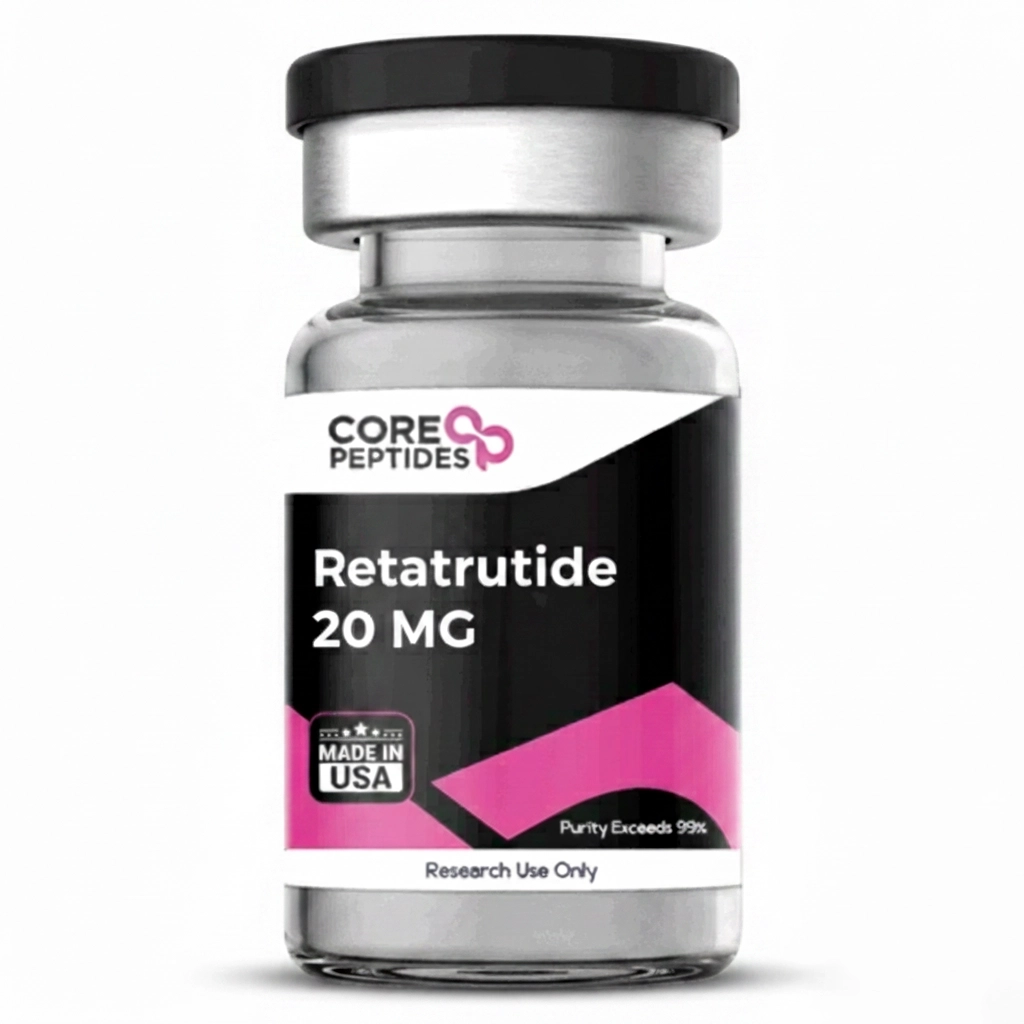
Retatrutide peptide (LY3437943) is a synthetic triple-agonist peptide designed for preclinical and ex-vivo research in metabolic and receptor-signaling studies. Researchers use it to explore the combined activity at three receptor pathways:
- GLP-1 receptor – regulates incretin pathway signaling and glucose dynamics.
- GIP receptor – complements GLP-1 signaling in glucose-dependent models.
- Glucagon receptor – influences lipid mobilization and energy expenditure in experimental settings.
Retatrutide is supplied exclusively for laboratory research. It is not approved for human or veterinary use, and no clinical or therapeutic claims are made NIH Research.
Retatrutide dosing in research varies based on study design, experimental models, and receptor activity evaluation. Laboratories commonly reconstitute lyophilized vials and adjust concentrations to:
- Test receptor pathway synergy.
- Compare metabolic endpoints across triple-, dual-, and single-agonist peptides.
- Evaluate glucose and lipid signaling in vitro or in animal models (preclinical).
Example Dosing Approaches in Research:
| Experimental Model |
Retatrutide Concentration |
Notes |
| Cell culture (GLP-1 assays) |
10–50 nM |
Measure receptor activation via cAMP response |
| Ex-vivo pancreatic tissue |
50–200 nM |
Adjust per tissue mass and incubation period |
| Rodent metabolic studies |
0.1–1 mg/kg |
Only in preclinical, protocol-specific studies |
Researchers must consult primary literature for protocol-specific dosing, as efficacy varies by assay and tissue type (PubMed – LY3437943 studies).
BulkGLP supplies Retatrutide peptide in lyophilized vials with ≥99% purity verified via independent third-party HPLC/MS. Each batch includes a Certificate of Analysis (COA) available directly on the product page, ensuring:
- Lot-specific verification.
- Consistent quality across multiple research orders.
- Transparent documentation for institutional compliance.
Available vial sizes include 10 mg, 15 mg, 20 mg, 30 mg, and 50 mg. Both single vials and 10-pack options support ongoing research studies.
GLP-1 Receptor Signaling
- Promotes incretin-dependent signaling in experimental models.
- Assists in modeling glucose-stimulated pathways.
GIP Receptor Interaction
- Complements GLP-1 axis in metabolic research.
- Enhances understanding of dual-agonist synergy in preclinical studies.
Glucagon Receptor Pathway
- Facilitates lipid mobilization and energy expenditure modeling.
- Supports mechanistic studies on triple-agonist peptide activity.
This mechanistic clarity enables researchers to evaluate pathway interactions, receptor synergy, and metabolic outcomes in controlled laboratory settings.
| Feature |
Retatrutide |
Tirzepatide |
Semaglutide |
| Agonism |
Triple: GLP-1, GIP, Glucagon |
Dual: GLP-1, GIP |
Single: GLP-1 |
| Research Focus |
Combined receptor-pathway signaling |
Incretin pathway modulation |
GLP-1 signaling only |
| Experimental Advantage |
Models multi-receptor synergy |
Well-characterized dual-agonist effect |
Single receptor specificity |
| Lab Use |
In-vitro/ex-vivo research |
Preclinical studies |
Preclinical research |
This comparison helps labs select peptides for receptor-focused investigations and metabolic modeling. You may also be interested in our related research peptides, including AOD 9604, TB 500 Peptide, IGF1 lR3, Gonadorelin, Thymosin Alpha 1, Chonluten, DSIP Peptide, Epithalon, Nad Peptide, and GHRP 6.
Dosage Considerations
- Reconstitute lyophilized peptide according to experimental needs.
- Use sterile buffers, minimize freeze-thaw cycles, and follow institutional safety guidelines.
Storage Guidelines
- Unreconstituted: store dry, light-protected.
- Reconstituted: 2–8 °C in aliquots to reduce degradation.
- Shelf life: up to 4 years under optimal storage conditions.
Handling Safety
- Supplied exclusively for research.
- Laboratories must comply with institutional regulations and relevant laws.
Retatrutide side effects are documented in preclinical models:
- Minor gastrointestinal responses in animal studies.
- Dose-dependent receptor signaling variability.
- No human side effects are confirmed, as clinical use is not approved.
Researchers should review primary literature for observed experimental outcomes (ClinicalTrials.gov – LY3437943).
BulkGLP provides Retatrutide for sale with verified purity and U.S.-based shipping. Key purchasing points:
- Domestic fulfillment ensures rapid delivery.
- COA available for each lot.
- Single vials and 10-pack bundles support ongoing studies.
- No human-use claims; strictly laboratory and scientific research.
Retatrutide Cost and Price
- Cost varies by vial size and pack options.
- Bulk orders may offer economies of scale for research programs.
- Transparent pricing ensures budget planning for labs.
Research Evidence Snapshot
Preclinical studies highlight the metabolic potential of triple-agonist peptides compared to dual- and single-agonist counterparts:
- Enhanced glucose-dependent receptor activation.
- Improved lipid mobilization and energy expenditure modeling.
- Synergistic effects in GLP-1, GIP, and glucagon signaling assays (Nature Metabolism – LY3437943).
Researchers should consult primary sources to design dosing regimens, optimize experimental protocols, and interpret metabolic outcomes accurately.
Retatrutide FAQ
Q1: What vial sizes are available?
Retatrutide research vials come in 10 mg, 15 mg, 20 mg, 30 mg, and 50 mg fills.
Q2: Is it fulfilled from the USA?
Yes. BulkGLP ships from U.S. inventory with verified packing standards.
Q3: Is a Certificate of Analysis (COA) provided?
Yes. Each lot has a current COA posted for verification.
Q4: Are 10-pack options available?
Yes. Single vials and 10-packs allow labs to match quantities to study requirements.
Q5: How is retatrutide dosing determined?
Dosing depends on assay type, tissue or model system, and receptor pathway being studied. Researchers must reference primary studies for optimized protocols (PubMed LY3437943).
Summary of Research Use and Guidelines
- Retatrutide peptide supports advanced metabolic modeling.
- Dosing must be protocol-specific and evidence-based.
- Researchers gain reliable results using verified, high-purity batches.
- Strictly for laboratory studies; human or veterinary applications are not approved.
Outbound References:
- NIH Research
- PubMed – LY3437943 studies
- ClinicalTrials.gov – LY3437943
- Nature Metabolism – LY3437943

Reviews
There are no reviews yet